
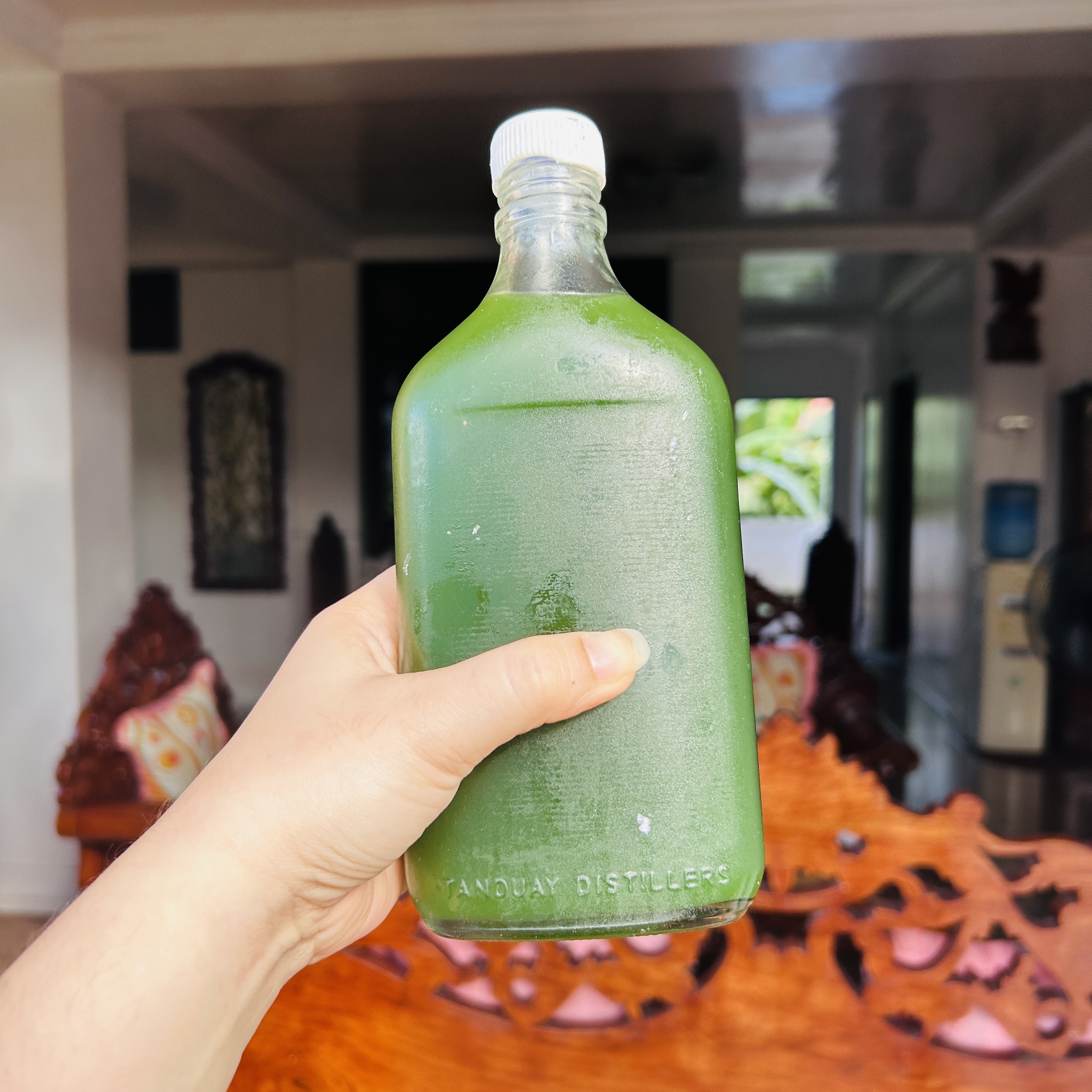
Most people imagine honey glowing somewhere between pale gold and deep amber, the familiar color we expect when we open a jar. That assumption held for me too, until I noticed something unusual sitting in my father’s kitchen.
The honey was green.
It had a gentle jade tint, like diluted matcha or sunlight passing through young leaves. The color made me pause and look twice.
What makes the story even more curious is that this wasn’t a one-time discovery. My dad has been having green honey delivered to him for more than a decade. He has a regular supplier who brings it, and he has always insisted that the honey is completely legitimate.
For years I never thought much about it.
Only recently did the jar catch my attention. I had started reading about bees and learning more about beekeeping. Suddenly the jar looked more like a small mystery. Apparently, green honey is rare.
So how could it keep appearing here?
The answer may lie in the kind of place Leyte is.
The Rare Recipe for Green Honey
Even in places with rich ecosystems, green honey is rare because several conditions have to line up at the same time.
First, bees must collect nectar primarily from a plant that contains pigments strong enough to tint honey.
Second, that plant must dominate the bees’ foraging area for a period of time. Honeybees typically forage within a few kilometers of the hive. If too many different flowers are involved, the pigments become diluted.
Third, the pigment must survive the transformation from nectar to honey. Bees reduce water content and use enzymes to convert nectar sugars. During this process many plant compounds break down or become too faint to notice.
Only occasionally do those pigments remain strong enough to influence the color of the final honey.
This is why most honey remains golden, even in regions with hundreds of flowering plants.
Why Leyte Might Produce Green Honey
If there is a place where unusual honey colors could appear, Leyte actually makes sense.
The island has a combination of tropical forests, coconut farms, flowering shrubs, mangroves, and wild plants. Bees here do not rely on just one or two nectar sources. They move across a rich and complex landscape.
Some of the plants bees commonly visit in this region include:
- coconut blossoms
- wild forest vines and shrubs
- flowering trees
- mangrove species along coastal areas
- tropical herbs and weeds
Each of these plants produces nectar with its own chemical profile.
When bees concentrate on a particular flowering plant during a bloom, the honey harvested during that period can develop a distinctive color and flavor. If that plant produces pigments capable of influencing honey color, the result might look slightly different from the typical amber shade.
In other words, the biodiversity of Leyte creates the perfect conditions for rare honey varieties to appear.
The Health Benefits of Honey
Regardless of color, honey itself offers several well-studied health benefits.
One of the most recognized health benefits of honey is its natural antimicrobial activity. Honey contains compounds such as hydrogen peroxide, organic acids, and plant-derived polyphenols that can inhibit the growth of certain bacteria. Because of these properties, medical-grade honey is sometimes used in wound care to help prevent infection and support healing.
Honey is also rich in antioxidants, particularly polyphenols and flavonoids that originate from the flowers bees visit. These compounds help neutralize free radicals in the body, molecules associated with cellular damage and inflammation. Studies have shown that darker and more complex honeys often contain higher concentrations of these plant antioxidants.
Another commonly studied benefit is honey’s ability to soothe coughs and throat irritation. Research has found that honey can reduce nighttime coughing, especially in children, sometimes performing as well as certain over-the-counter cough medicines. Its thick texture coats the throat while the natural sugars stimulate saliva production, helping calm irritation.
Although honey is still a concentrated sugar and should be consumed in moderation, raw honey benefits include trace minerals, enzymes, and plant compounds that refined sugar does not contain.
In many ways, I feel fortunate that the honey in our home is locally sourced. Not only are we supporting local beekeepers, we are also enjoying all of these said health benefits that honey naturally provides.
A Jar of Green Honey Tells a Local Story
My father’s green honey has been appearing in our kitchen for more than ten years. He trusts his supplier and insists the honey is completely authentic. To him, the color is just a small curiosity. But after learning more about bees, I see that jar differently.
Honey reflects the environment around the hive. Every jar carries chemical traces of the flowers bees visited and the landscape they traveled through.
In a place like Leyte, where forests, farms, and wild plants grow side by side, it is easy to imagine bees discovering unusual nectar sources. Maybe somewhere nearby there is a flowering plant that produces nectar with just enough pigment to tint the honey.
If that is the case, the green color is not strange at all.
It is simply the landscape of Leyte, captured in a jar of honey.