
Stress doesn’t always show up as panic.
Sometimes, it’s a constant tightness in your shoulders. A mind that keeps running even when nothing urgent is happening. You sit down to rest, but your body doesn’t fully follow.
In many urban environments, that low-level stress becomes normal. Noise, traffic, heat, screens, and constant movement keep your system slightly alert all day. It’s not overwhelming, but it’s continuous. Your body rarely gets a true break.
You may not notice it right away. But over time, it builds.
Then you spend a few days somewhere quieter. Somewhere with more open space, more trees, more air. And without doing anything special, you start to feel different.
Lighter.
That shift is not just emotional. It’s physiological.
What Nature Changes in Your Body
When you’re constantly surrounded by noise, movement, and stimulation, your body stays slightly activated. Your heart rate runs a little higher, your muscles hold more tension, and stress hormones like cortisol circulate more than they need to.
It’s not enough to feel like panic. But it’s enough to keep your system from fully settling.
Urban environments tend to sustain this state. There is always something to process, something to react to, something pulling your attention. Even moments of rest are often filled with screens or background noise. Your body rarely gets a clear signal that it is safe to power down.
Natural environments interrupt that pattern.
Research shows that exposure to green spaces helps lower cortisol levels, reduce blood pressure, and slow heart rate. These are measurable changes, not just subjective feelings. Your nervous system begins to shift away from constant alert and toward a more regulated state.
At the same time, your brain experiences less strain. In highly stimulating environments, your attention is constantly being directed and redirected. This effort builds mental fatigue. In contrast, natural surroundings allow for what researchers describe as effortless attention. You notice things without trying. The movement of leaves, the sound of wind, the openness of the sky.
Your mind stays engaged, but it is not working as hard.
This has a quiet but important effect. Mental load decreases. Focus improves. Irritability softens.
There is also a difference in how your body handles stress once it occurs. In less stimulating environments, your system returns to baseline more easily. Tension does not linger in the same way. Even short periods outdoors can help your body release what it has been carrying.
What This Looks Like in the Province
In the province, this isn’t something you have to create on purpose.
It’s already part of your surroundings.
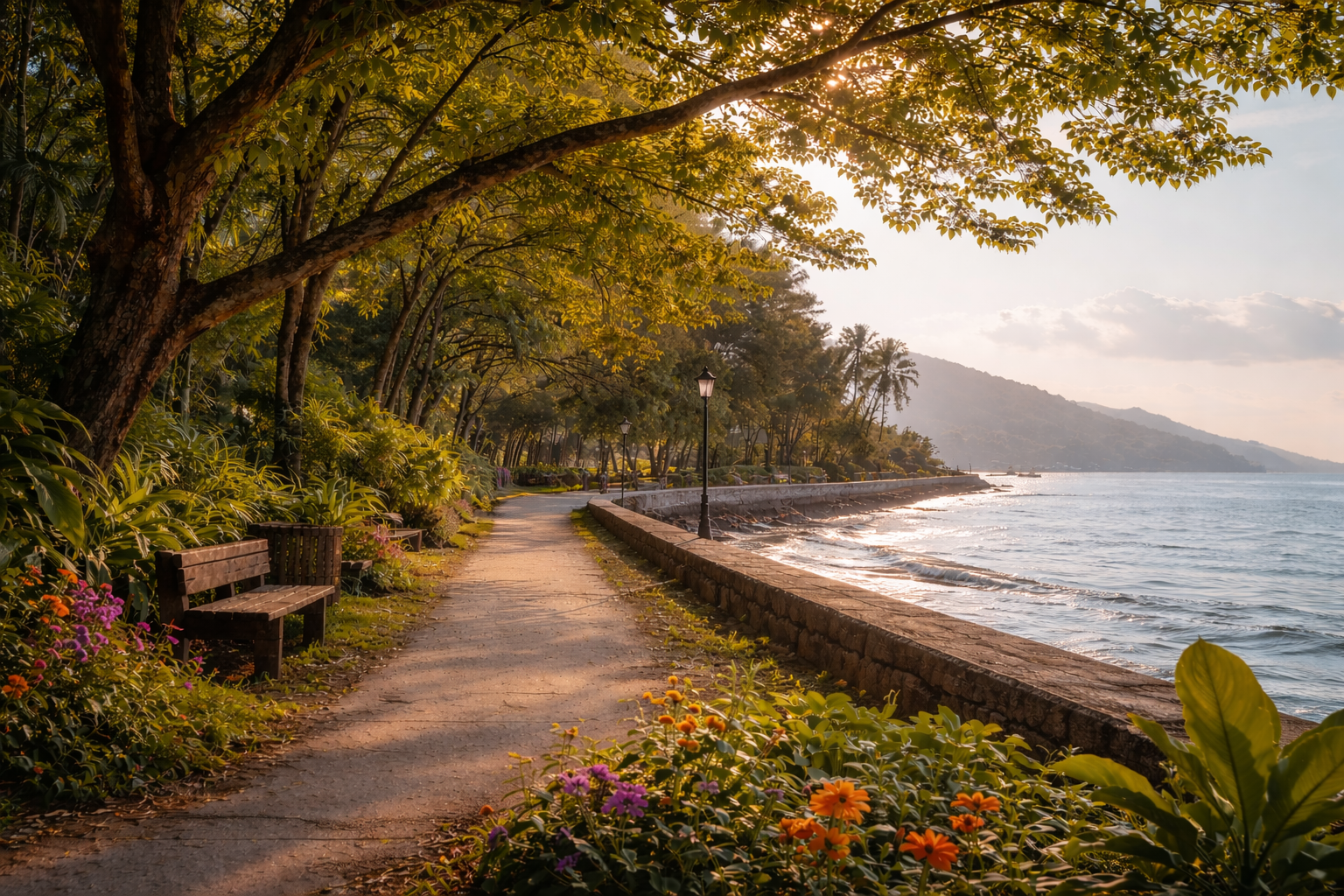
Where I am, I can step outside and go for a jog along the seawall. There’s no planning involved, no need to travel far. I can smell the sea breeze, hear the waves, and see open water stretching out instead of buildings.
It changes the experience of movement. It doesn’t feel like something I have to push myself to do. It’s something I naturally want to do.
And while I’m there, my breathing becomes more even. My shoulders loosen. My thoughts don’t feel as crowded.
There are also days when I go to a nearby park. Nothing elaborate. Just trees, flowers, and space to sit or walk. But even a short time there feels different from being indoors or surrounded by constant noise.
The environment itself is quieter, but it’s more than that. It’s less demanding.
These moments are simple, but they happen often. And that consistency matters more than intensity.
Because your body doesn’t respond only to big changes. It responds to repeated signals. When you are regularly exposed to open spaces, natural sounds, and less crowded environments, your system learns that it does not need to stay on edge.
You are not following a routine to reduce stress. You are simply living in a place that gives your body more chances to regulate.
Living near nature does not remove stress.
There is still work to do. There are still responsibilities to manage. Difficult days still happen. But your body carries those demands differently.
With less constant stimulation, your nervous system is not pushed to stay alert all the time. Your brain is less overloaded. Your body is able to recover more easily from what it experiences.
These changes are subtle. But over time, they create a different baseline. That is why life in the province often feels calmer, even if nothing else has changed. Because your body is no longer being asked to stay “on” all the time.
And sometimes, that shift in your environment is enough to change how everything else feels.